how to play we dont believe whats on tv
A lexander Serdyuk has stopped talking to his mother. He is nervously watching war edge ever closer to his home in Lviv. She is ane,500 miles (2,400km) to the east in Russia, denying that whatever of it is actually happening.
"I tin't speak with her," says the 34-year-one-time Russian who moved to Ukraine 10 years ago. "She doesn't understand me. She says it'due south just Nazis killing each other, and that we are responsible for all this."
"She just doesn't believe me," he adds. "We used to speak with each other a lot, but now there's just no point."
Information technology's the same for Natasha Henova. She has already fled her home virtually Kharkiv with her young sons and husband, as the bombs crept ever closer to their village. When she chosen a cousin who lives well-nigh Moscow to update her, however, the conversation was almost as upsetting as the war itself.
"She is sympathetic only says that we are existence lied to," says Henova, a 35-year-erstwhile English language tutor. "She says it's all America's doing. I say OK, just why are Russians hit us if information technology's all about America? She says Ukrainians have been and so savage to people in the Donbas.
"She said Ukrainian soldiers must surrender. She even invited me to come to Russia to be with her. I didn't know whether to laugh or cry. I'm desperately struggling here to keep Ukraine independent and she invites me to go to Russia."
Every bit Russian federation's war in Ukraine enters its fourth week, an information state of war between people on both sides of the border is intensifying. The armed services onslaught is not simply demolishing residential buildings and city centres in Ukraine; it is sorely testing myriad familial cross-border ties that have endured for decades, centuries even.
While people in Ukraine tin see with their own eyes what is happening to their state, people in Russia do and then just through the firm of mirrors that is country tv set, and when those cowering in bunkers send videos and messages almost their plight, many (simply not all) of the recipients simply dismiss it as imitation news.
Natalia Ivanivna has Russian parents and grandparents, so when the 62-year-old accountant had to abscond Kharkiv before this month for a village in western Ukraine, there were plenty of relatives whom she wanted to alert. "Xv minutes after the shelling started, I sent them a series of messages: 'We are beingness bombed.' The showtime question they asked me: 'Who is doing the bombing – our army or yours?'"
Ivanivna says she believes it is fear every bit much as ignorance that shapes the worldview across the border. "I think they are scared of Putin's government, as much every bit my parents were scared of Stalin'due south. Now they only don't respond. I don't have acrimony towards them; I just feel pitiful for them."
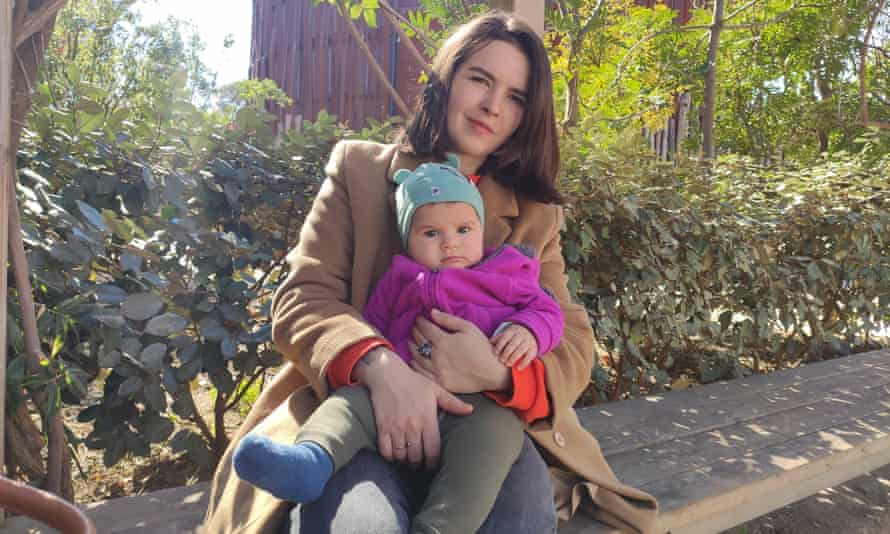
So pervasive and persuasive is Russian television set, that fifty-fifty some people in eastern Ukraine who lookout it were taken in by its version of events.
Maria Kryvosheyeva, who fled Kharkiv with her 2 children, has a grandmother who stayed behind, too fragile to travel. "She used to but watch Russian television," Kryvosheyeva says, "and when the war started I noticed she was very calm. She was similar, 'Don't worry. Putin said everything is OK.'"
She changed her tune when Russian forces started bombing Kharkiv. "Nosotros turned over to Ukrainian television, which was showing everything, all the destroyed buildings. But Russian TV was showing webcam videos from days earlier and was telling people that everything was normal in Kharkiv. My grandmother started to cry. She said: 'I can't believe I've been brainwashed all these years.'"
About one-half of Ukrainians – more than xx million people – have family in Russia, co-ordinate to a 2011 survey which also found that a third of Ukrainians had friends or acquaintances there. Familial interchange between the two countries has been prolific for centuries, from the early days of empire in the 17th century, through the late Soviet period and into the age of independence, says Orysia Lutsevych, a research fellow at Chatham Business firm.
"Remember, Moscow was always the metropolis of the empire," she says, explaining why so many Ukrainians moved eastward over the past 300-plus years. "Information technology was an attractive place for people who wanted to brand a career. The similarity of the language meant it was piece of cake to go and study in that location. The best institutes were there, then it was very prestigious to get."
Russians and Ukrainians living in other countries besides feel infuriated with the denialism that seems to have infected their relatives. The kind of things they hear include: the state of war footage is fake; Nazis are running amok; Ukrainians should stay indoors or the fascists volition get them.
Natasha, a UK-based Russian who didn't want her surname published, has a Ukrainian begetter and Russian mother who both now live in western Siberia. Her begetter's family are from Vinnytsia, in Ukraine, all the same, and some of them have already fled to Poland. Natasha asked her dad if he'd spoken to his brother. Her begetter said yeah and that everything was fine – though he couldn't hear much through the air raid sirens.
"I said to him, 'How can everything exist fine if there are air raid sirens? How is that OK?'"
She says her mother parrots Russian boob tube, about the suffering of Russian people in eastern Ukraine and the need to protect them.
"But this sounds mad to me," Natasha says, "because my family unit is Russian-speaking and they are fleeing to Poland."
"When I ask my mother if she's seen the images, the footage, and what's happening in the cities, she says they are all imitation," Natasha adds. "It'due south so frustrating not to be able to have this chat. I'm really disappointed that she believes the president instead of me."
Some of this might be generational. Natasha says the older generation grew upward through the Soviet menstruation believing that the west was confronting them, that the only people they could trust were their own leadership. She says there is a deep Russian sense of being the greatest nation on Earth, with the richest resources, a survivor race that can get through anything. "Of form they are going to believe what they have been told."
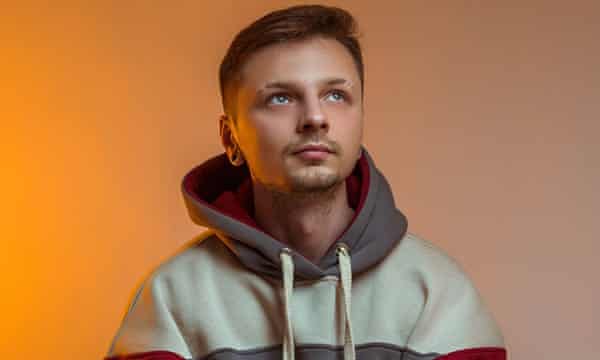
Forgiveness may accept a long time. Lutsevych says there is a very strong sense of 'we will not forget' in Ukraine, a decision that when the bombs have stopped falling, war crimes must exist punished and people held accountable. She says it will probably take a truth and reconciliation process like to what happened in South Africa after apartheid for families to be able to speak to each other again.
Artur Kolomiitsev, a 28-twelvemonth-erstwhile lensman sticking it out in Kharkiv, is not certain he tin forgive. His parents in Russia are understanding, he says, only his aunts, uncles, cousins and grandmother less then.
"They don't believe this state of war is real. They believe we are bombing ourselves and that our government is on drugs," he says. "If 1 day I were to ship them a picture of a missile hitting me in the head, maybe simply so would they believe me. I don't want to see them any more. I don't want to talk to them any more. I will never forgive them."
Despite losing job, domicile and peace of mind, Natasha Henova doesn't want to lose touch with her younger cousin, who was conspicuously also a close friend through their formative years.
"Maybe when information technology's all over, maybe in a few years, if my family unit stays alive, possibly I'll be able to forgive her and understand her."
Source: https://www.theguardian.com/world/2022/mar/18/ukraine-russia-families-divided-over-war
Belum ada Komentar untuk "how to play we dont believe whats on tv"
Posting Komentar